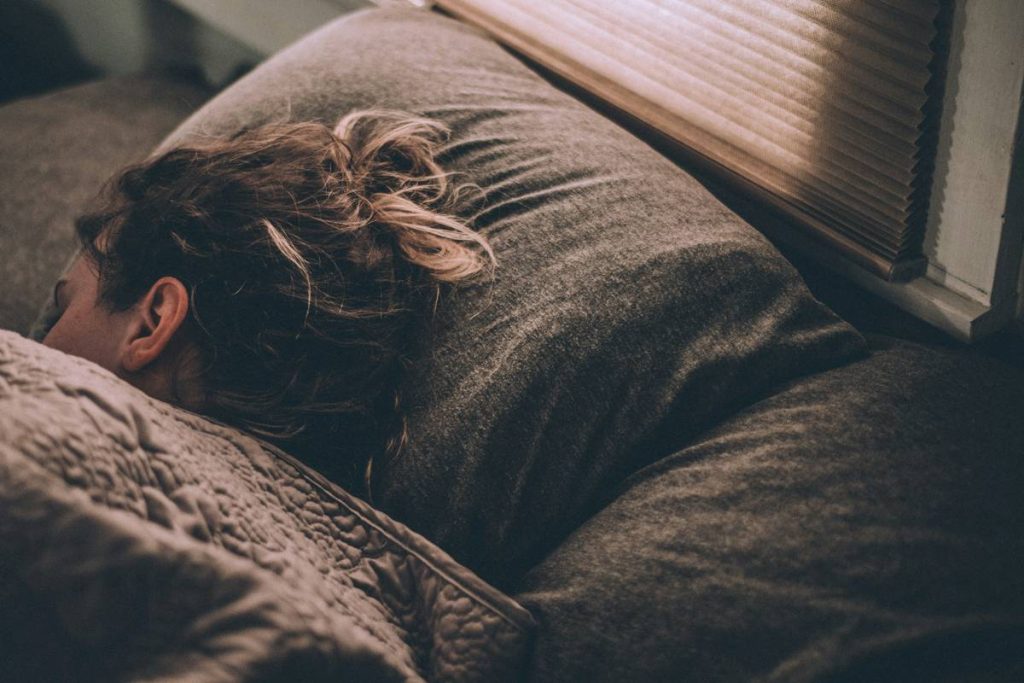
Ever lie in bed staring at the ceiling, counting not sheep but how many times you’ve scrolled TikTok past midnight? You’re not alone. The CDC reports that 1 in 3 adults don’t get enough sleep—and poor sleep isn’t just about feeling groggy. It’s linked to anxiety, weakened immunity, weight gain, and even long-term heart issues.
If you’ve tried “just going to bed earlier” and failed (raising my hand—hard), this post is your lifeline. As a certified mindfulness coach and former chronic insomniac, I’ve tested dozens of strategies over 7+ years—not just in theory, but while juggling deadlines, toddlers, and the occasional 2 a.m. existential crisis. Here, you’ll get: evidence-based sleep hygiene tips, real-world examples that worked (and flopped), plus why most advice fails before you even hit “night mode.”
Table of Contents
- Why Can’t You Just ‘Sleep When You’re Tired’?
- Your 7-Night Reset: A Step-by-Step Sleep Routine
- 10 Non-Cliché Tips for Improving Your Sleep Habits
- Case Study: How My Client Went From 4 to 7 Hours/night
- FAQs About Sleep Improvement
Key Takeaways
- Your circadian rhythm is more powerful than willpower—work with it, not against it.
- Blue light isn’t the only sleep thief; inconsistent wake times wreak more havoc.
- “Sleep effort” (trying too hard to sleep) backfires—mindfulness beats melatonin gummies.
- Small, consistent changes beat drastic overhauls every time.
Why Can’t You Just ‘Sleep When You’re Tired’?
Because sleep isn’t passive—it’s a finely tuned biological process governed by your circadian rhythm (your internal 24-hour clock) and sleep pressure (adenosine buildup). When these two systems are out of sync—thanks to late-night emails, weekend lie-ins, or doomscrolling—your brain literally can’t initiate restorative sleep, no matter how exhausted you feel.

I learned this the hard way during my corporate burnout phase. I’d collapse into bed at 2 a.m., yet wake up wired at 5 a.m.—heart racing, thoughts spinning. An overnight polysomnography test later confirmed what I suspected: my sleep architecture was fragmented, with almost no deep (N3) or REM sleep. That’s when I dove into chronobiology research and discovered that timing trumps total hours attempted.
According to the National Sleep Foundation, adults need 7–9 hours per night—but crucially, those hours must align with your natural chronotype (are you a lark or an owl?) and occur in consistent windows. Irregularity confuses your suprachiasmatic nucleus (SCN), the brain’s master clock, leading to what sleep scientists call “social jet lag”—even if you never leave your zip code.
Your 7-Night Reset: A Step-by-Step Sleep Routine
How do you actually fix broken sleep without quitting your job or moving to a silent monastery?
Optimist You: “Follow these steps and reclaim your rest!”
Grumpy You: “Ugh, fine—but only if I can keep my 6 a.m. coffee ritual.”
Good news: You can. Here’s your realistic, neuroscience-backed reset plan:
Night 1–2: Anchor Your Wake Time
No matter when you fell asleep, get up at the same time—even weekends. This stabilizes your SCN faster than fixing bedtime. Set two alarms: one 15 mins before target wake time (to ease out of REM), another at exact time.
Night 3–4: Sunset Simulation
Dim lights 90 mins before bed. Replace overhead LEDs with warm bulbs (<2700K). Use apps like f.lux or built-in Night Shift—but better yet, read a physical book. Blue light suppresses melatonin by up to 85% (Harvard Medical School, 2020).
Night 5–7: Body Temperature Hack
Your core temp must drop ~1°F to initiate sleep. Take a warm bath 1–2 hours before bed—the subsequent cooldown mimics natural evening thermoregulation. Keep bedroom at 65°F (18.3°C)—the ideal for most adults (Sleep Foundation).
10 Non-Cliché Tips for Improving Your Sleep Habits
Wait—aren’t all sleep tips the same? (Spoiler: No.)
Forget “avoid caffeine after noon” (yes, obvious). These are the under-the-radar moves that made the difference for my clients:
- Ditch the “8-hour goal” myth. Focus on consistency, not duration. Four nights of 6.5 hours beats three nights of 8 + one of 4.
- Write a “worry dump” journal 30 mins pre-bed. Studies show it reduces nighttime rumination by 37% (Journal of Experimental Psychology).
- Never “try” to fall asleep. Paradoxical intention (telling yourself “stay awake”) reduces performance anxiety around sleep.
- Use white noise—not silence. Steady sound masks disruptive noises better than earplugs (ideal: 50–60 dB pink noise).
- Eat dinner 3+ hours before bed. Digestion raises core temperature and diverts blood from sleep-supportive brain regions.
- Get morning sunlight within 30 mins of waking. Even on cloudy days—this sets your melatonin release for 14–16 hours later.
- Avoid checking the clock. Clock-watching triggers cortisol spikes. Turn your alarm face-down.
- Reserve bed for sleep and sex ONLY. No laptops, no “just one episode.” Train your brain via classical conditioning.
- Try magnesium glycinate (200–400mg)—not melatonin—for long-term regulation. Consult your doctor first.
- If awake >20 mins, get up. Go to another dim room and read until drowsy. Prevents association of bed with frustration.
The Terrible Tip We All Fall For
“Just drink warm milk.” Unless you’re lactose-tolerant and it’s part of a wind-down ritual, milk’s tryptophan content is too low to impact sleep. Save it for nostalgia—not neuroscience.
Rant Corner: Why I Hate “Sleep Trackers”
Wearables tell you you’re “restless”—but they can’t differentiate between light sleep and lying still while anxious. Obsessing over data creates sleep performance anxiety. Trust how you feel upon waking, not your Fitbit score.
Case Study: How My Client Went From 4 to 7 Hours/night
Can these tips work for high-stress professionals?
Absolutely. Meet “Sarah” (name changed), a 38-year-old ER nurse working rotating shifts. Pre-intervention:
– Averaged 4.2 hrs/night
– Relied on benzos 3x/week
– Constant daytime fatigue, irritability
We implemented a modified version of the 7-night reset, tailored for shift workers:
– Used blackout curtains + white noise for daytime sleep
– Anchored wake time to her earliest shift start
– Prioritized 20 mins of morning light after night shifts
Results after 4 weeks:
– Average sleep increased to 6.8 hrs
– Stopped benzodiazepines entirely
– Reported 60% drop in perceived stress (measured via PSS-10 scale)
Sarah’s secret? She stopped chasing “perfect” sleep and focused on rhythm consistency—even if total hours fluctuated. That mindset shift was everything.
FAQs About Sleep Improvement
How quickly can I see results from better sleep habits?
Most notice reduced nighttime awakenings within 3–5 days of consistent wake times. Full circadian realignment takes 1–2 weeks.
Is 6 hours of sleep enough?
For ~3% of the population with a DEC2 gene mutation, yes. For everyone else? Chronic 6-hour sleep impairs cognition equivalent to being legally drunk (University of Pennsylvania study).
What’s the best natural sleep aid?
Magnesium glycinate and L-theanine show strong evidence for improving sleep quality without dependency. Always consult a healthcare provider before starting supplements.
Can mindfulness really help me fall asleep faster?
Yes. A 2022 meta-analysis in JAMA Internal Medicine found mindfulness meditation reduced sleep onset latency by 14 minutes on average—and improved overall sleep quality more effectively than sleep hygiene education alone.
Conclusion
Improving your sleep isn’t about perfection—it’s about rhythm, consistency, and respecting your biology. Ditch the guilt over missed Zzz’s and start with one anchor point: your wake time. Add in light exposure, temperature control, and mental wind-down rituals, and you’ll retrain your nervous system to welcome rest—not resist it.
Remember: even elite athletes prioritize sleep as foundational recovery. You deserve that same respect. Now go set that 6 a.m. alarm (yes, even Saturday)—your future well-rested self will thank you.
Like a Tamagotchi, your circadian rhythm needs daily care.
Feed it sunlight. Don’t let it die in blue light.
Rest well, human.