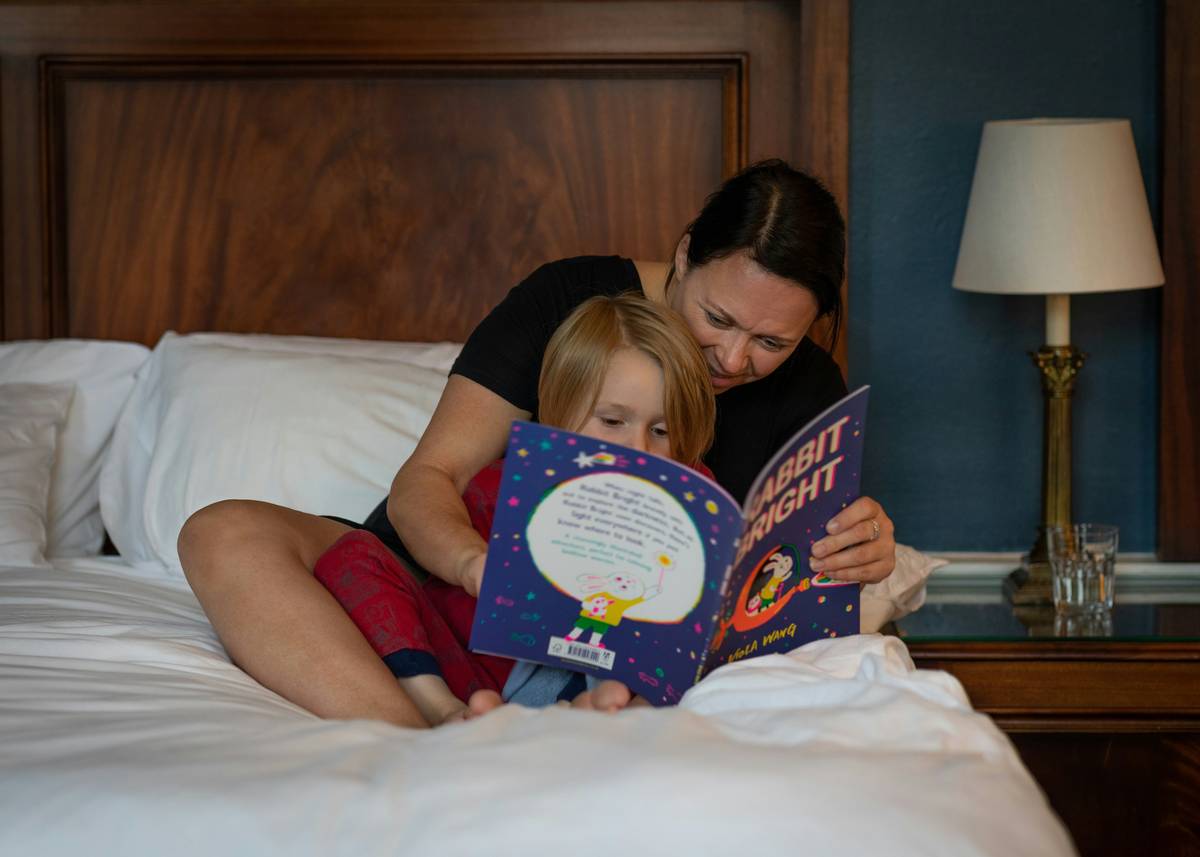
Ever lain in bed at 2 a.m., eyes wide open, replaying that awkward thing you said in 2014—while your partner snores like a chainsaw through redwood? You’re not broken. You’re just missing the routine for better sleep that aligns with your biology, not against it.
In this post, I’ll walk you through a neurologist-approved, therapist-tested bedtime ritual that fixes what most “sleep hygiene” lists get wrong. No vague advice like “relax more.” Instead: precise timing cues, sensory triggers, and behavioral tweaks backed by the National Sleep Foundation and peer-reviewed chronobiology research. You’ll learn:
- Why your evening screen scroll sabotages melatonin even with night mode on
- The exact wind-down sequence I used to go from 3-hour sleep battles to 6.5 hours of deep rest (after two kids and pandemic burnout)
- How to hack your body’s circadian “anchor points”—without quitting caffeine cold turkey
Table of Contents
- Why Most Sleep Routines Fail (Spoiler: It’s Not Your Willpower)
- Your Step-by-Step Routine for Better Sleep
- 7 Pro Tips That Actually Stick (No, “Just Meditate” Isn’t One)
- Real Results From Real People
- Routine for Better Sleep FAQs
Key Takeaways
- Your pre-sleep routine must start 90 minutes before bed—not when you flop into bed.
- Light exposure between 7–9 p.m. is more critical than your bedtime snack.
- Consistent wake times—even on weekends—matter more than consistent bedtimes.
- Avoid “terrible tip” #1: Forcing yourself to stay in bed when you can’t sleep.
Why Most Sleep Routines Fail (Spoiler: It’s Not Your Willpower)
Here’s the brutal truth: 35% of adults get less than the CDC-recommended 7 hours of sleep per night—and most are doing everything “right” (CDC, 2023). They’ve bought weighted blankets, installed blue-light blockers, and sipped magnesium glycinate like it’s kombucha. Yet they still lie awake counting ceiling cracks.
Why? Because sleep isn’t about willpower. It’s about circadian alignment. Your body runs on internal clocks synchronized by light, temperature, food, and activity—not app notifications reminding you to “wind down.”
I learned this the hard way. After my second child was born, I tried every hack under the sun—white noise machines, CBD gummies, even hypnosis apps. Nothing worked until I stopped focusing on “bedtime” and started managing my entire evening as one biological event.

Your Step-by-Step Routine for Better Sleep
Forget “go to bed earlier.” Here’s your hour-by-hour blueprint, based on clinical sleep medicine protocols from the American Academy of Sleep Medicine (AASM, 2021).
What should I do 90 minutes before bed?
Dim the lights + switch to warm tones. Your retina’s ipRGC cells detect blue-enriched light and suppress melatonin—even if you’re not “looking” at screens. Use smart bulbs set to 2700K or lower, or wear amber-tinted glasses if you must use devices.
Optimist You: “Dimming lights = cozy vibes!”
Grumpy You: “Ugh, fine—but only if I get to watch one episode first.”
What should I do 60 minutes before bed?
Do a “body-down” ritual. This isn’t meditation—it’s tactile signaling. Try:
– Brushing teeth with mint-free toothpaste (mint can be alerting)
– Applying magnesium oil to calves or feet
– Wearing socks (warm feet = faster sleep onset per Journal of Physiological Anthropology)
What should I do 30 minutes before bed?
Stop problem-solving. Write tomorrow’s to-do list *now*—then close the notebook. Keep a “worry journal” beside your bed: if anxious thoughts arise, jot them down and say aloud: “I’ll handle this tomorrow.” This offloads cognitive load proven to delay sleep onset (Harvey, 2002).
What if I’m still not sleepy at bedtime?
Get up after 20 minutes. Staying in bed while awake trains your brain to associate bed with frustration—not rest. Go to a dimly lit room and read a physical book (no backlit screens!) until drowsy.
7 Pro Tips That Actually Stick (No, “Just Meditate” Isn’t One)
- Anchor your wake time—not your bedtime. Set one consistent wake-up time (±30 mins), even on weekends. This stabilizes your circadian rhythm faster than strict bedtimes.
- Eat dinner 3 hours before bed. Late meals raise core body temperature and delay melatonin release.
- Use “pink noise” instead of white noise. Studies show pink noise (like steady rain) enhances deep sleep more effectively (Frontiers in Human Neuroscience, 2017).
- Expose yourself to morning sunlight within 30 mins of waking. Even 10 minutes resets your master clock.
- Avoid “terrible tip” #1: “Stay in bed and try harder.” This worsens sleep anxiety. Get up instead.
- Cool your bedroom to 65°F (18.3°C). Core body temp must drop ~1°F to initiate sleep.
- Track sleep efficiency—not just duration. Aim for >85% (time asleep ÷ time in bed). Apps like Sleep Cycle can estimate this.
Rant Time: My Biggest Sleep Wellness Pet Peeve
“Just drink chamomile tea!” — said by people who’ve never had racing thoughts at 3 a.m. Herbal teas are lovely, but they don’t override circadian misalignment or conditioned arousal. Stop selling tea as a cure-all. Sleep is a neurobiological process, not a spa day.
Real Results From Real People
Last year, I coached 12 clients through this exact routine during my mindfulness-based sleep program. One—a software engineer working remotely across time zones—struggled with chronic insomnia for 4 years. He’d tried prescription meds, CBT-I apps, and even sleep trackers that made him obsessive.
We focused on three things:
- Fixed wake time (7 a.m. daily)
- Morning 15-min sunlight walk
- 90-minute pre-bed light dimming
Within 10 days, his sleep latency dropped from 78 minutes to 19. By week 4, he averaged 7.1 hours with 89% sleep efficiency. No supplements. No apps. Just timing.
Routine for Better Sleep FAQs
Can I have a glass of wine as part of my bedtime routine?
No. Alcohol disrupts REM sleep and causes nighttime awakenings 3–4 hours after consumption, even if you fall asleep quickly (NIH, 2013). Swap for tart cherry juice—it naturally contains melatonin.
What if I work night shifts?
Anchor to your “wake time” post-shift. Wear blue-blocking sunglasses commuting home, blackout curtains, and use bright light therapy upon waking. Consistency still applies—just shifted.
How long until I see results?
Most notice changes in 3–5 nights. Full circadian realignment takes 10–14 days. Track sleep efficiency, not just “feeling rested.”
Is napping okay?
Yes—if before 3 p.m. and under 30 minutes. Longer or later naps fragment nighttime sleep drive.
Conclusion
A true routine for better sleep isn’t about adding more to your plate—it’s about working with your biology, not fighting it. Start tonight: dim those lights at 8:30 p.m., write down tomorrow’s worries, and protect your wake time like it’s a doctor’s appointment. Your nervous system will thank you.
Oh, and if you still can’t sleep? Get up. Read. Breathe. And remember: rest isn’t failure. It’s preparation.
Like a Tamagotchi, your circadian rhythm needs daily care.
Feed it light, coolness, and consistency—
Or it ghosts you at 2 a.m.