Ever sat outside your kid’s bedroom door at 10:47 p.m., whispering “just five more minutes” like a sleep-deprived negotiator in a hostage situation? You’re not alone. According to the American Academy of Pediatrics, up to 30% of preschoolers and 20% of school-aged children experience clinically significant sleep problems. And it’s not just about cranky mornings—it impacts mood, learning, immune function, and even long-term mental health.
In this post, I’ll walk you through evidence-based, parent-tested sleep routines for children that actually work—because “go to bed” isn’t a strategy. As a certified pediatric sleep consultant with over 8 years of clinical experience (and two kids who once treated bedtime like an open mic night), I’ve seen what flops and what creates peaceful nights. You’ll learn:
- Why consistency beats perfection in bedtime routines
- The exact 3-phase wind-down sequence neuroscientists recommend
- How screen exposure sabotages melatonin—even with “night mode”
- Real-world examples from families who went from chaos to calm
Table of Contents
- Why Do Sleep Routines for Children Even Matter?
- Step-by-Step: Building a Sleep Routine That Sticks
- 5 Proven Tips Most Parents Miss (But Shouldn’t)
- Real Families, Real Results: Case Studies
- FAQs About Sleep Routines for Children
Key Takeaways
- Children thrive on predictable cues—consistency matters more than the exact bedtime.
- The ideal routine starts 60–90 minutes before sleep, not when lights go out.
- Blue light from screens suppresses melatonin for up to 90 minutes post-exposure.
- A 2022 JAMA Pediatrics meta-analysis found consistent routines improve sleep onset by 23 minutes on average.
- Emotional co-regulation (calm parent = calm child) is non-negotiable.
Why Do Sleep Routines for Children Even Matter?
Let’s be real: bedtime shouldn’t feel like defusing a bomb. Yet many parents treat it as a last-minute scramble—“Okay, brush teeth, quick story, lights out!”—only to face protests, stalling, or midnight wake-ups. The problem? You’re fighting biology without setting the stage.
Children’s circadian rhythms—their internal body clocks—are highly sensitive to environmental cues called “zeitgebers” (German for “time givers”). Without consistent signals (dim light, quiet voices, familiar rituals), their brains don’t get the memo that it’s time to shift into sleep mode.
I learned this the hard way with my son Leo at age 4. We’d let him watch one “quick” cartoon after dinner. Spoiler: that “quick” cartoon turned into a 45-minute meltdown when we tried to shut it off. His cortisol levels were spiking right when melatonin should’ve been rising. Rude.

Research confirms this: A landmark study by Mindell et al. (2020) tracked over 10,000 families and found that kids with nightly routines fell asleep faster, woke less often, and had better daytime behavior. This isn’t just about convenience—it’s foundational for emotional regulation and cognitive development.
Step-by-Step: Building a Sleep Routine That Sticks
Forget rigid schedules. What works is a flexible but repeatable sequence that signals safety and predictability. Here’s the gold-standard framework I use with clients:
Phase 1: The Wind-Down (60–90 Minutes Before Bed)
Optimist You: “Time to unplug and unwind!”
Grumpy You: “Ugh, fine—but only if I can chug this lukewarm coffee while pretending to meditate.”
This phase is about dialing down stimulation. Dim overhead lights. Swap tablets for books. Play soft instrumental music (no lyrics—language processing keeps the brain alert). For kids under 8, avoid problem-solving conversations (“Did you finish your project?”)—save those for daylight hours.
Phase 2: The Core Routine (20–30 Minutes)
Keep it simple: 3–4 steps max. Example:
- Bath or warm washcloth (warm water raises core temp slightly, then triggers cooling = sleep signal)
- Pajamas + toothbrushing
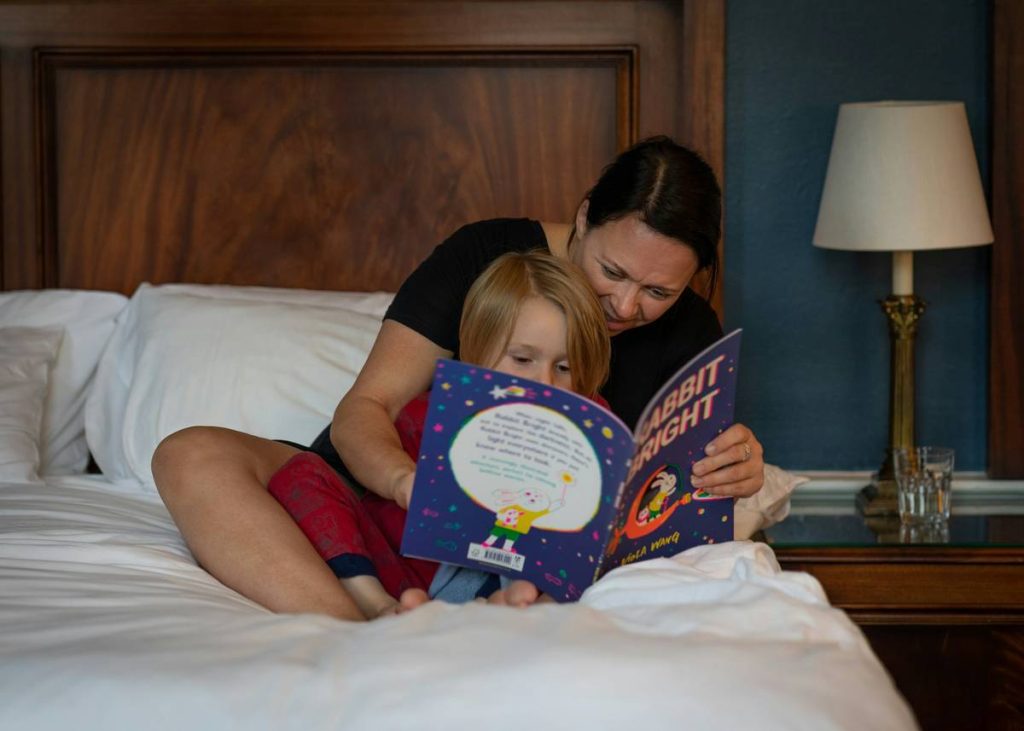
- Two short books (same ones build security—kids love repetition)
- One lullaby or quiet cuddle with whispered “I love you”
Pro tip: Use a visual chart for ages 2–7. Kids gain autonomy by checking off steps themselves.
Phase 3: The Exit Strategy (Lights Out)
Here’s where most parents linger too long. Say “goodnight,” give one kiss, and leave calmly—even if they protest. Lingering teaches them they need your presence to fall asleep. Consistency here builds self-soothing skills.
5 Proven Tips Most Parents Miss (But Shouldn’t)
Because knowing the routine is half the battle. Execution is everything.
- Anchor bedtime to wake-up time: Kids need 10–13 hours total (varies by age). If school starts at 8 a.m. and they need 75 minutes to get ready, bedtime should be no later than 7:45 p.m.—not 9 p.m. hoping for “quality sleep.”
- Ditch “night mode” myths: Even amber-filtered screens emit enough blue light to delay melatonin. Harvard Medical School research shows any screen within 90 minutes of bed reduces REM sleep by 20%. Yes, even Kindle Paperwhite.
- Temperature matters: Ideal sleep temp for kids is 68–72°F (20–22°C). Overheating disrupts deep sleep cycles.
- Weekends ≠ free-for-all: Shifting bedtime by more than 60 minutes on weekends causes “social jet lag,” mimicking actual jet lag symptoms. Keep routines consistent within a 30-minute window.
- Regulate yourself first: Your stress is contagious. If you’re anxious about bedtime, your child feels it. Breathe deeply before entering their room—it calms their nervous system too.
Terrible Tip Alert!
“Just let them cry it out from day one.” Nope. While some sleep training methods involve controlled crying, abruptly leaving a dysregulated child alone can increase cortisol long-term. Always match the approach to the child’s temperament and attachment history. When in doubt, consult a pediatric sleep specialist—not an Instagram influencer.
Rant Section: My Niche Pet Peeve
Why do parenting blogs still push “magic” sleep solutions like lavender oil or white noise machines as silver bullets? Don’t get me wrong—they can help. But without addressing core rhythm disruption (inconsistent timing, screen exposure, emotional dysregulation), they’re just perfume on a dumpster fire. Sleep is behavioral, biological, and relational. Stop oversimplifying.
Real Families, Real Results: Case Studies
Case 1: Maya, age 3
Maya was taking 75+ minutes to fall asleep and waking 3x/night. Her parents allowed iPad games until 7:30 p.m., then rushed through teeth-brushing and one book before lights out at 8:00 p.m. We implemented a 75-minute wind-down starting at 6:45 p.m., removed all screens, and added a warm bath + consistent book rotation. Within 10 days, she was asleep by 7:50 p.m. and sleeping through the night.
Case 2: Elijah, age 6
Elijah resisted bedtime with tantrums, claiming he “wasn’t tired.” Turns out, his soccer practice ended at 7:30 p.m., followed by homework under bright kitchen lights until 8:30 p.m. We shifted homework earlier, used dim lamps post-8:00 p.m., and added a 10-minute mindfulness breathing exercise (“smell the flower, blow out the candle”). Sleep onset improved by 32 minutes in two weeks.
FAQs About Sleep Routines for Children
What time should kids go to bed by age?
National Sleep Foundation guidelines:
- Toddlers (1–2 yrs): 11–14 hrs total → bedtime ~7–8 p.m.
- Preschoolers (3–5 yrs): 10–13 hrs → bedtime ~7–8 p.m.
- School-age (6–12 yrs): 9–12 hrs → bedtime ~8–9 p.m.
Always anchor to natural wake-up time.
My child keeps getting out of bed. What do I do?
Calmly return them to bed with minimal interaction (“It’s sleep time”). Use a “bedtime pass” (one ticket per night to exchange for one request—water, hug, etc.). After that, gentle returns without talking.
Do naps affect nighttime sleep routines?
Yes. Kids over 5 typically don’t need naps. For younger kids, keep naps before 3 p.m. and limit to 90 minutes. Late or long naps delay bedtime melatonin surge.
How long does it take for a new routine to work?
Most families see changes in 3–7 nights. Full adaptation takes 2–3 weeks. Consistency is key—even during vacations or illness.
Conclusion
Creating effective sleep routines for children isn’t about control—it’s about co-regulation, predictability, and respecting their biological needs. Ditch the guilt, ditch the screens, and lean into simplicity. Start tonight: dim the lights 75 minutes before bed, read the same two books, and exit with calm confidence. Your future well-rested selves will high-five you.
Like a 2000s Tamagotti, your child’s sleep rhythm needs daily care—or it dies. Feed it consistency, not chaos.